Overview of Botanical Ingredients
Throughout human history, various cultures have identified and utilized specific botanical resources for supporting health and wellness. Many of these plants have been valued for centuries, with their uses documented in traditional medical systems across different regions.
This article explores several botanicals that are commonly studied and discussed in the context of joint health and flexibility support.
Turmeric (Curcuma longa)
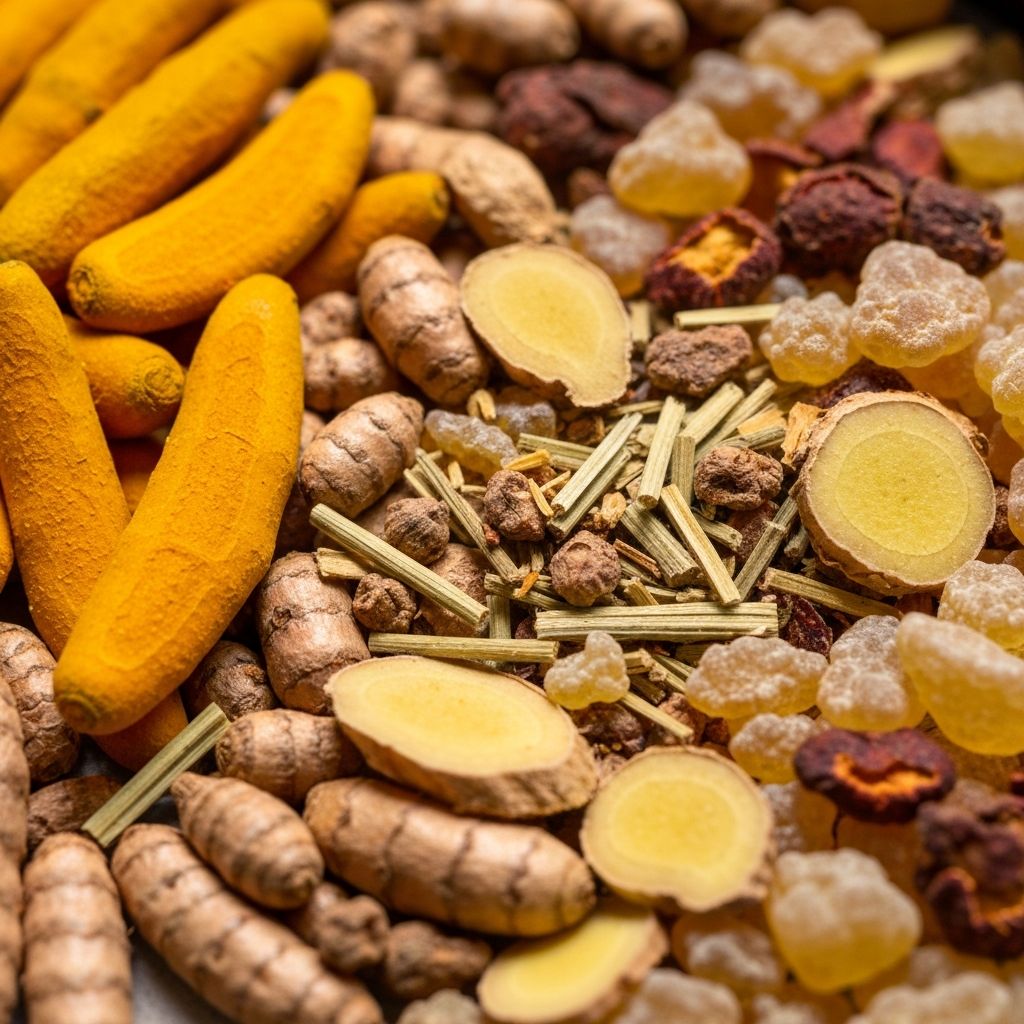
Turmeric is a golden-yellow spice derived from the rhizome of the Curcuma longa plant. It has a long history of use in traditional medicine systems, particularly in Ayurvedic and Traditional Chinese Medicine practices.
The plant contains various compounds, including curcuminoids, which have been the subject of scientific study. In traditional wellness contexts, turmeric preparations have been valued for supporting general inflammation management and maintaining comfort.
Turmeric is commonly used as a culinary spice and also available in concentrated forms such as capsules and extracts.
Ginger (Zingiber officinale)
Ginger is a warm, aromatic rhizome that has been used in traditional medicine for thousands of years. It appears in ancient texts from Ayurvedic, Traditional Chinese, and Greco-Roman medical traditions.
The plant contains various active compounds that have been studied for their potential roles in supporting circulation and comfort. In traditional practice, ginger has been valued for supporting general wellness and maintaining healthy inflammatory responses.
Ginger is versatile in preparation: fresh root, dried powder, teas, tinctures, and capsules are all common forms.
Boswellia (Boswellia serrata)
Boswellia serrata is a tree native to India, Africa, and the Middle East. Its resin has been used in traditional Ayurvedic medicine for centuries, valued for supporting joint health and maintaining flexibility.
The resin contains boswellic acids, compounds that have been studied for their potential effects on comfort and mobility support. Traditional practitioners have valued Boswellia for maintaining joint function during aging processes.
Boswellia is typically extracted and prepared as a concentrated resin or in capsule form.
Devil's Claw (Harpagophytum procumbens)
Devil's Claw is a plant native to southern Africa with a long history of traditional use. The secondary root tubers contain various compounds that have been studied in the context of comfort and mobility.
In traditional African medicine, Devil's Claw was valued for supporting joint comfort and maintaining flexibility. The plant is now commonly used in European herbal medicine traditions as well.
Preparations typically include dried root extracts, capsules, and tinctures.
Green-Lipped Mussel (Perna canaliculus)
The green-lipped mussel is native to New Zealand and has become increasingly studied for its nutritional composition. It contains a unique combination of amino acids, omega-3 fatty acids, and glycosaminoglycans.
These compounds have been examined for their potential roles in supporting joint structure and maintaining mobility. While not a traditional botanical (being marine), it has gained recognition in modern wellness practices.
Green-lipped mussel is available in concentrated extract forms, capsules, and powders.
Key Points
- Botanical resources have been used historically across many cultures
- Different plants contain various active compounds
- Traditional uses vary across different medicine systems
- Preparation methods affect bioavailability
- Individual responses to botanicals vary